A calm, private way to notice perimenopause and menopause symptoms β hot flushes, sleep, mood, and what youβre taking β with a clear summary for when you see your GP or health practitioner. Nothing to fail at.
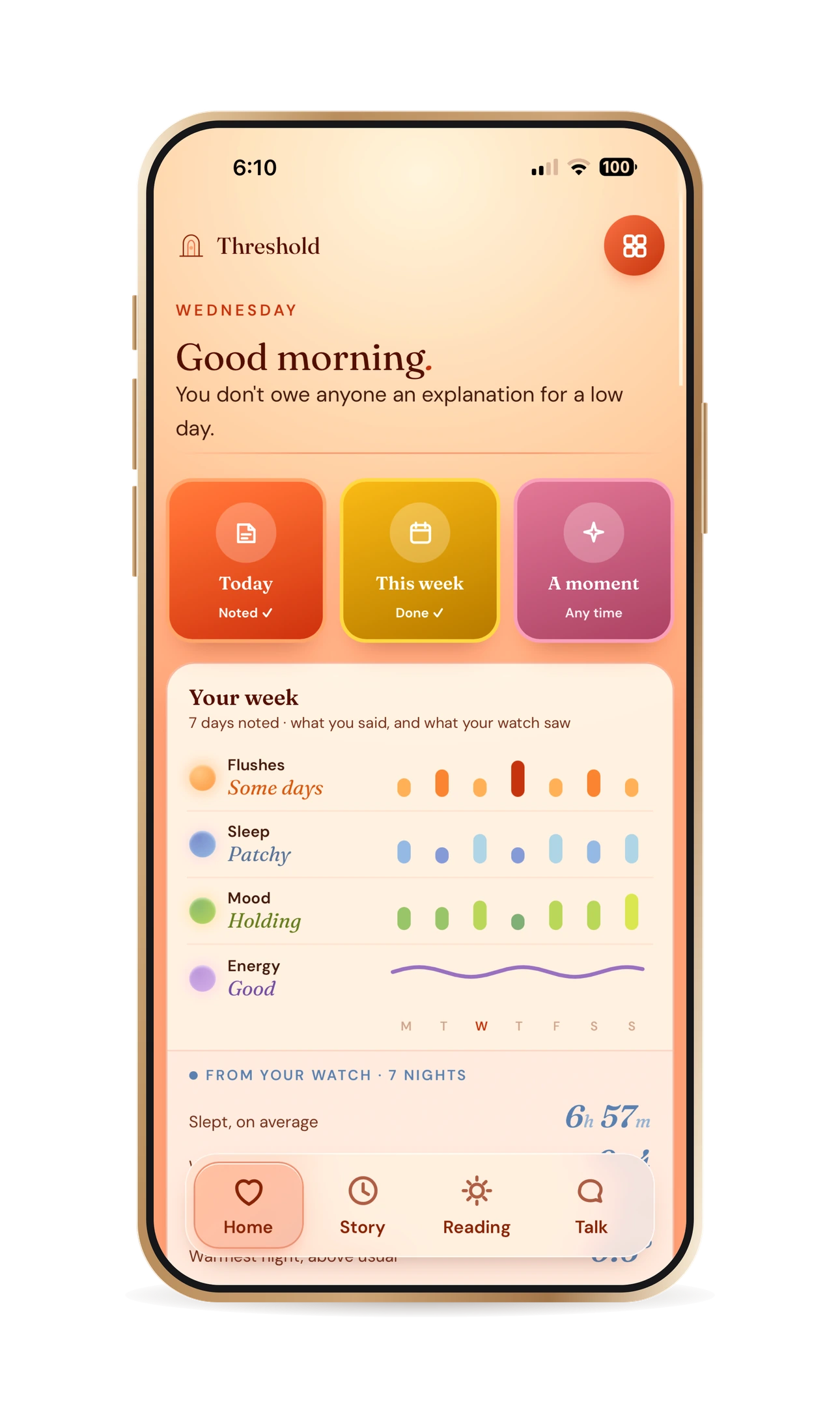


A diary you can talk with. It holds what you notice, watches for the patterns you might miss, and β whenever you like β talks them through with you. The more you write, the more it has to reflect back: a record that isn't just kept, but grows.
Four small parts, each doing a little β never asking you to keep up, keep streaks, or keep score.
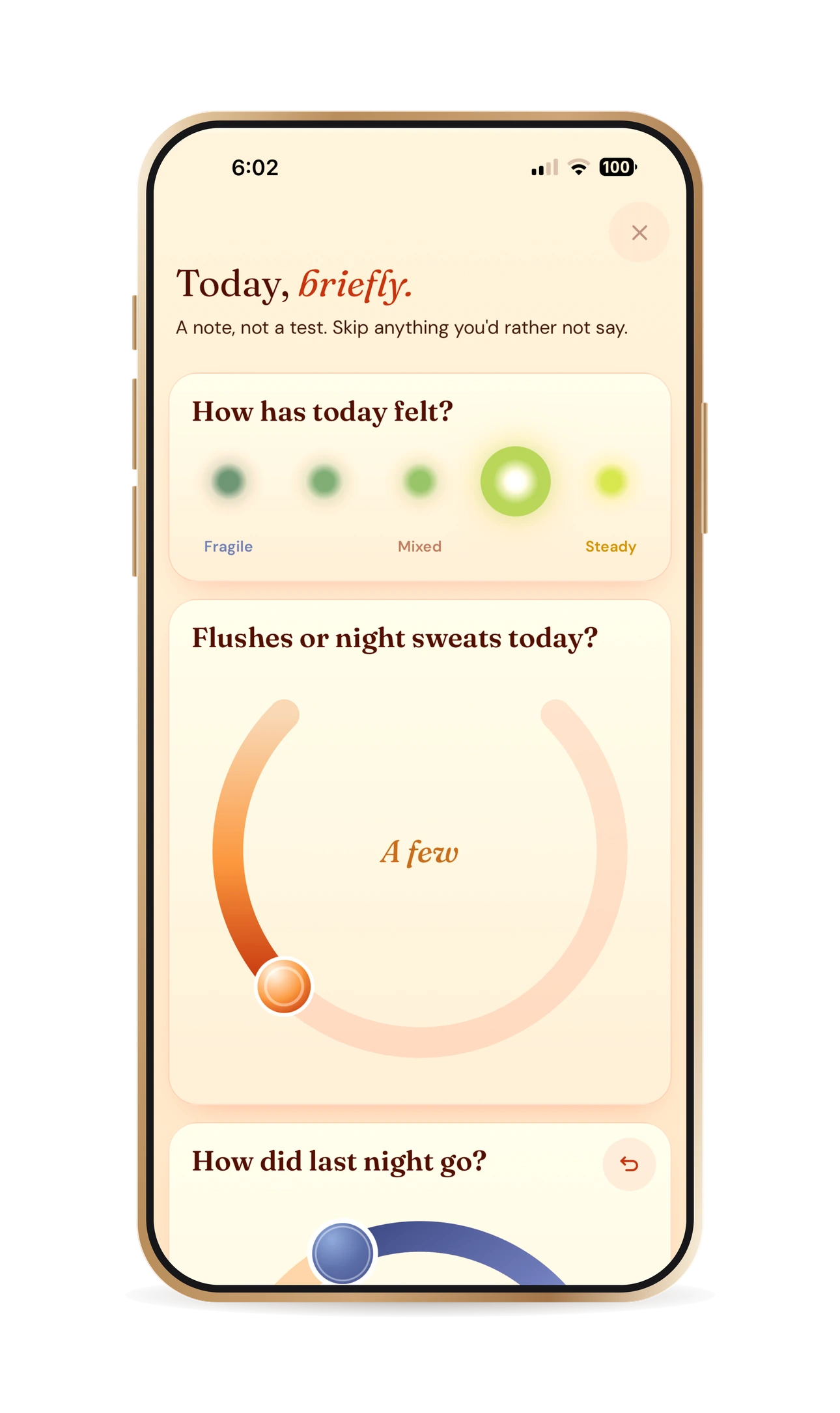
A few soft taps a day on how you're feeling β warmth, sleep, mood, energy. No streaks, no scores, nothing to keep up with.
Every so often, Threshold reflects your weeks back to you β patterns, not a diagnosis, always yours to question.
Everything you've noted, gathered into a story you can look back through β and the things worth keeping close.
A clear summary to bring to an appointment, so the things that matter aren't forgotten in the room.
Threshold asks for very little and keeps all of it. A note when the day is done, a moment when something happens, and — when you need it — one clear page to take with you.

How the day felt, whether the flushes came, how you slept. It takes a moment, at whatever hour suits you — and skip any of them. A note, not a test.
Step one
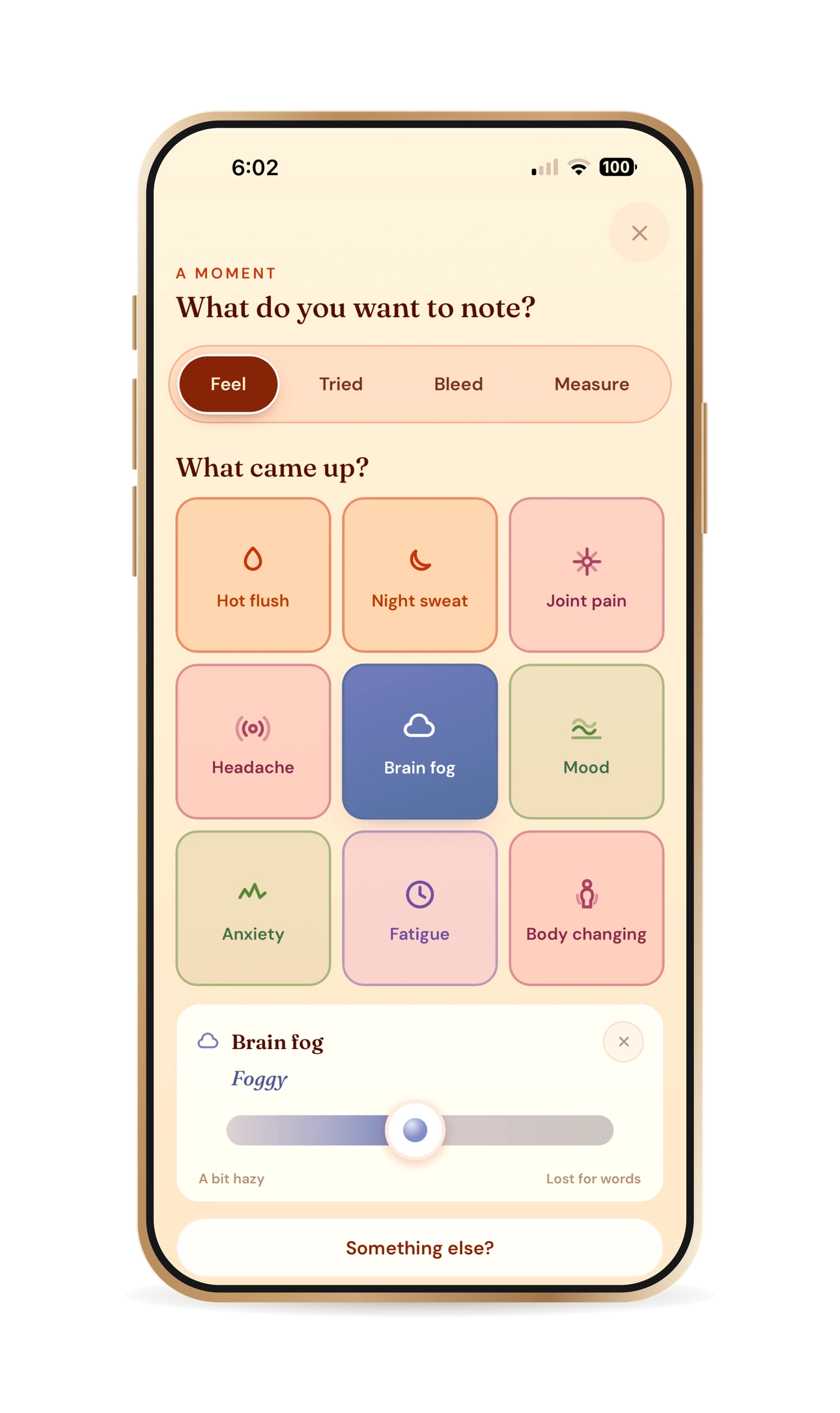
A hot flush at 3am, a headache before lunch, a walk that helped. Say what it was and how strong it felt — dated and exact, without writing an essay.
Step two
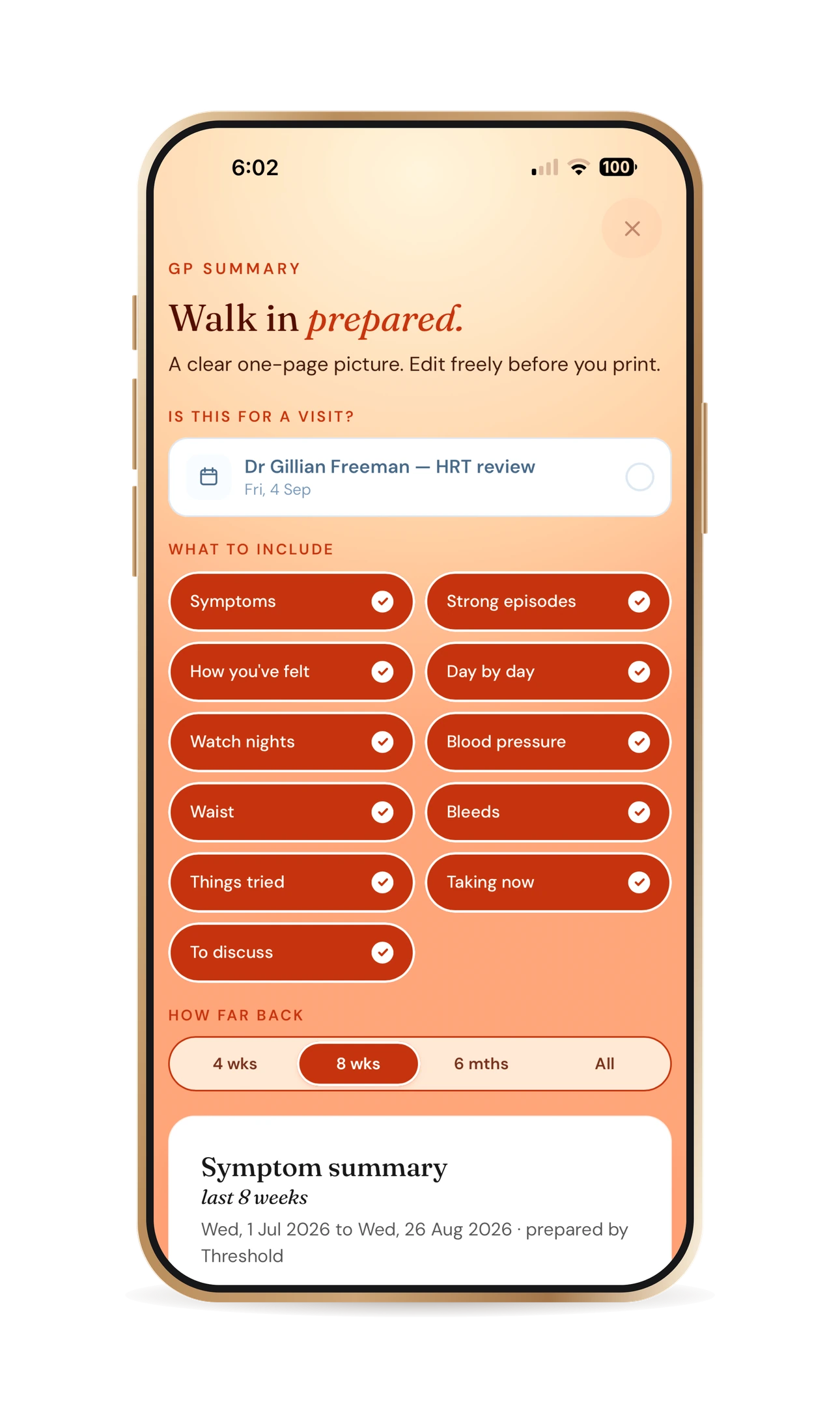
Months of small notes become a clear summary. Choose what goes on it and how far back it reaches, then print it, send it ahead, or just hand over your phone.
Step threeThreshold holds the appointment together — before it, and after.
The summary carries as much or as little as you choose — your points to discuss, day by day, the nights from your watch, blood pressure, bleeds, what you’ve tried, and what you’re taking now.
If you wear a watch, it already records the things that are hardest to recall in the morning. Threshold reads them, so they sit alongside what you've noticed yourself.
How long, and how broken. A watch sees the wake-ups you slept through β the ones a night sweat leaves behind and the morning forgets.
The overnight shifts, measured against your own usual night rather than anybody else's β the thing you can't feel in the morning.
A quiet background line that moves with the rest of it. Not a score, not a target β just another thing you didn't have to write down.
Apple Watch, Fitbit, Garmin, Oura β they all write into Apple Health or Health Connect already. Threshold reads from there, on your phone. Nothing new to wear.
Threshold only ever reads β it never writes anything back to Apple Health or Health Connect, and what it reads stays on your phone with everything else.
No account needed to begin. Your notes live on your phone, not on a server somewhere. If you ever want a private backup, it's yours to switch on β never on by default, and never shared.

Threshold is not a diagnostic tool, and not a substitute for a doctor or practitioner. It helps you notice and remember β the rest is a conversation for you and your GP or health practitioner.
Plain writing about noticing your way through the change β and taking what you notice to the people who can help.

The handful of things worth writing down, so a short appointment goes further.
Read β
Why a few weeks of notes can make an uncertain time clearer.
Read β
The philosophy behind an app that helps you notice, and leaves the advice to your practitioner.
Read β